Written by
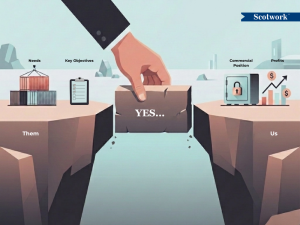
As negotiators we often focus on our issues, to the exclusion of trying to understand the other party’s objectives. This oversight is a major source of failure in negotiations. Unless both parties achieve their objectives, there cannot be a lasting agreement.
In my early career, before I became a consultant in negotiation, I ‘cold-called’ doctors in general practice to arrange appointments to enable me to sell a range of pharmaceutical products. I was having very limited success in securing appointments – doctors were just too busy to find time to see me.
It wasn’t until I reframed the issue from the doctors’ perspective that a possible solution emerged. I realized that their working day was spent in a small room seeing a procession of sick people. What could I provide as an incentive for them to take time out from healing to see me? The first thing I needed to do was to get them outside of their consulting rooms to take a break from the next patient. But what would encourage them to take a break?
Well, I thought, they probably take a break for lunch, so why not provide a healthy lunch for them in return for their time listening to a quick presentation from me on the benefits of the products I offered. It worked; most doctors accepted the lunch invitation.
The strategy was overwhelmingly successful – doctors listened actively, and sales took off.
Although I must admit, however, I can still recall a comment made at the start of one of my presentations at a medium sized GP practice in South London, where a doctor asked me (his mouth stuffed full of Marks & Spencer’s salmon wrap), “So, why are you here?”
In earnest, I began my ‘pitch.’ I had some samples ready to show him, but before he even got to the stage to view them, he interrupted me.
“Stop right there,” he said. “You’re giving me indigestion!” I was flabbergasted. It was almost comical – did he really just say that? I couldn’t believe that anyone was capable of such blatant rudeness.
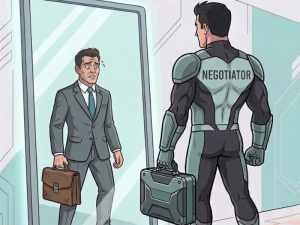
As humans, we fear rejection. We are all vulnerable. But what if we could remain emotionally detached while refocusing and strategically reframing objectives? What if rejection could be seen as an opportunity?
My experiences in sales prepared me for the current role I play as a tutor with Scotwork. When faced with rejection, I don’t feel like a failure. I remain curious about the reasons behind the apparent rejection and look for ways ahead.
As negotiators, we need to ‘walk a mile in their shoes.’ In this case with the doctors, after putting myself in their shoes, I could see that setting up time-efficient lunch meetings was what worked best for both parties. And also through my own experiences in dealing with difficult customers and ‘cold-calling.’
Once you can step into the worlds of others, even for a short time, you can begin to navigate your way through to successful outcomes in negotiations.