Written by
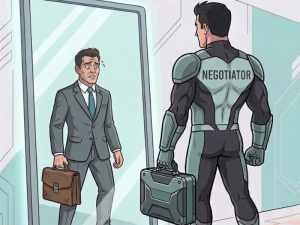
It is no secret that confident negotiators get better outcomes. They are more likely to advocate for their own positions and less likely to succumb to threats or demands. The impact of confidence was never more apparent to me than watching a team of buyers negotiate price reductions with their suppliers.
Even though we had spent considerable time and effort prior to the negotiations coaching the team so they would be ready, they were still a little reserved at the start of the negotiations. There was an air of doubt, and this translated into the negotiations as:
- Offering unintended signals of flexibility
- Making requests, instead of demands
- Reluctance to bring power to the table
- Overly willing to throw concessions in order to achieve gains
Even though our buyers showed some hesitation, their counterparts were much less confident. It was clear that they hadn’t prepared and practiced like we had. They hadn’t been trained in negotiation, they hadn’t practiced through mock negotiation case-plays, and they hadn’t prepared responses to worst case scenarios. The counterparts didn’t challenge our demands, they weren’t clear on their sources of power, and missed their opportunities to negotiate intangibles.
As the negotiations rolled on our buyers became even more confident. Early wins thickened their skin immensely, and by the end of the week they were running rings around their suppliers. They not only achieved their objectives, but they were also:
- Getting more efficient at securing the cost reductions,
- Securing significant intangible benefits such as additional support/resource and intelligence about their suppliers,
- In some cases, they even extended their intend position after picking up on signals of flexibility from their suppliers.
These observations reinforced a few things for us:
- It is critical for significant negotiations that you not only prepare, but also practice key parts of the negotiations with coaching so that worst case scenarios, such as escalating sanctions, can be handled effectively,
- Significant momentum can be created through holding multiple negotiations over a short period, and maximised through learning loops and sharing successes across the team,
- The negotiation can also be used as an opportunity to gain significant non-monetary benefits, which are often conceded more readily than dollars.
Interested to see how our negotiation coaching could help you in you next deal? Take a look at our consulting services here