Negotiating with Aggressive Counterparts: The Bully’s Paradox
 Written by
Ben Byth
| November 16, 2026
Key Takeaways: Negotiating with Aggressive Counterparts
- The Bully’s Paradox: Extreme aggression, gaslighting, and theatrical intimidation in negotiations often mask underlying insecurities, co-dependence, or regulatory pressures rather than absolute strength.
- Behaviour ≠ Leverage: Hostile tactics are designed to make you concede before you accurately assess the true power balance.
- Diagnostic Curiosity: Instead of reacting emotionally or folding, investigate why the other side needs you to believe you have no alternative and what happens to them if the deal fails.
“If you’re not here to give me the price I want, you can f… off.”
Sorry for the expletive… but that was how one young account manager was greeted by a retail buyer before he proceeded to throw their bag out of his office.
Another told me that one of her customers behaved so appallingly that she would either cry or vomit before visiting them.
We hear versions of these stories far too often.
Powerful, monopoly/duopoly negotiators, gaslighting counterparts about the quality of their service, their position in market, and commercial proposition. They make absurd opening demands, well outside of realistic. They dismiss legitimate concerns because, apparently, “you have no alternative.”
It looks like power. But is it?
The Bully’s Paradox in Commercial Negotiations
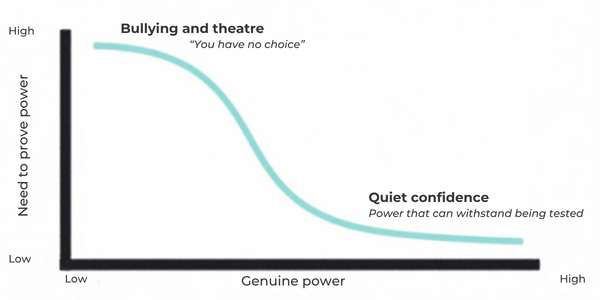
On the playground, the bully is often not the strongest or toughest child. They may simply be the most determined to make everyone else believe they are.
The genuinely strong rarely need to humiliate, gaslight or throw their weight around. They don’t need the theatre of power to prove it… because their power can withstand being tested.
That is the bully’s paradox: the more powerfully someone behaves, the less powerful they may actually feel.
Why Dominant Counterparts Use Intimidation
Perhaps they:
- Are equally worried about co-dependence… equally needing you?
- Are worried about precedent?
- Might be worried about small business legislation, code of conduct, or social scrutiny.
Perhaps they need your agreement more than their behaviour suggests.
Or it could simply be that bullying has simply worked for them before.
The point is not to assume that aggression means weakness. It is to stop assuming that aggression proves strength.
Behaviour is not the power balance. It is part of the information you use to investigate it.
4 Questions to Assess True Negotiation Leverage
So, when the other side starts acting like a bully, resist the temptation to give in or act inappropriately yourself. Instead, slow down and become curious:
- Why do they need me to believe I have no choice?
- What happens to them if we don’t agree?
- What might they be protecting beyond this deal?
- What pressures, dependencies or vulnerabilities are hidden behind the theatre?
Their behaviour may be designed to make you feel powerless before you have properly assessed whether you are.
Don’t help them.
Are you preparing for a negotiation in which the other side appears to hold all the power?
Get in touch with our team. We’ll help you separate the reality of their power from the performance of it – and identify what you may still be able to negotiate.
Similar articles
By Ben Byth | 19.10.26
Multi-Employer Bargaining: Who Really Wins When Industry Competition Fades?
With 59 applications and 39 approvals to commence authorised multi-employer bargaining at the time of…
By Ben Byth | 17.09.26
The Unspoken RFP Criterion: How One Throwaway Joke Cost Us a Major Deal
One joke cost me a deal worth more than my entire annual sales target…And I…
By Ben Byth | 20.08.26
Are You Negotiating… or Being Monstered? How to Unlock Hidden Leverage
Most negotiators don’t lose because they have less power… they lose because they convinced themselves…