Written by
Patience and the Importance of Self-Awareness
Sometimes urgent action is required when negotiating: after the spike in avgas prices, Lufthansa decided to cancel 20,000 flights, and as so often happens, this decision needed to be made quickly to react to changes in the environment.
However, there’s another set of strategic decisions and these focus on projects that guarantee long term growth for businesses. This is where patience is a virtue; that is, ensuring every element of the negotiation is executed in a considered way.
Skilled negotiators know the process (time, location, personnel, style) will impact on the outcomes achieved.
Interestingly, The Australian Financial Review (23rd April 2026) detailed a ten year negotiation for establishing a guided walk in the Ulu-u-Kata Tju National Park.
The negotiation provided an opportunity for a co-owner of the Tasmanian Walking Company, Brett Godfrey, to embark on a journey of self-discovery; one where he realised he required a different skill set than the one that enabled him to establish the Virgin Australia airline.
Godfrey explains that the negotiation finally taught him to, “learn to be quiet and just listen.”
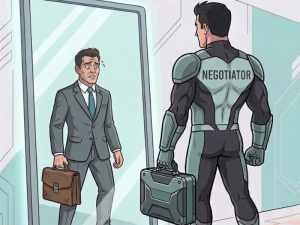
His insights provide an important lesson for all negotiators who have relied on a particular repertoire of skills to achieve success. While we may assume we have achieved mastery in negotiation, it may only apply to a specific context or counterparty.
Godfrey realised what had changed from his previous experience, was the way that the Traditional Owners negotiate. Their culture requires broad community consensus, which involves many discussions within their community that inevitably take time. The benefit of this process is that it achieves broad consensus within the host community, but these things cannot be rushed!
The key learning for Godfrey was that his job was not to make all the decisions himself, but to accept others’ decisions.
Key lessons for negotiators are:
i) Understand your personal strengths and weaknesses as a negotiator
ii) Determine whether the context of the negotiation is tactical or strategic
iii) Check whether the skills you possess are appropriate for the culture of the other party in the negotiation.
iv) Keep learning as a negotiator by reflecting on the impact of your personal negotiation style on your team and the other party.
How fascinating is the ever-changing landscape of negotiating? Not only do need to keep honing our skills, we need to draw on the ability to recognise and adapt to the constantly shifting cultures of others.
Where does your team stand? Building commercial self-awareness and helping teams adapt to complex negotiation landscapes is exactly what we do. If you’re ready to sharpen your team’s capability before your next big deal get in touch.